

☕ Buy Intel before or after the bell?
Jan 22, 2026Howdy! 👋
The markets are higher in early going.
The media is reporting that it’s because Greenland is “relaxing” but the real reason prices are on the uptake is that FOMO has entered the picture.
I hope you’re on board and that you bought at least a few shares of your faves during the worst of the selloff like I encouraged (and did personally).
Uncertainty always gives way to clarity.
Here’s my playbook.
1 – Buy Intel before or after the bell?
Intel reports today after the bell. (Read)
The stock has hit a four-year high leading into earnings so expectations are high.
This earnings report is a “prove it” moment.
The options market is pricing in a one-day post-earnings move of roughly ±8-8.8%, about double Intel's average post-earnings move over the past year (~4.6%).
The stakes are high.
How to play it?
That’s up to you, of course, but here’s my take.
I believe – given recent trading patterns with other highly anticipated stocks and decades of experience in the game – that there’s a good case the go-fast crowd has driven prices up knowing that many retail investors still think it’s a spiffy idea to buy on good results.
If so, the Merry Marauders will try to sweep in the last momentum buyers then, once that happens, take prices lower in the after-hours to flush out the weak money and “run the stops” - meaning take prices low enough to trigger trailing stops put in place by folks who are holding on too tight.
A few thoughts come to mind.
- If you own Intel, use the report to decide if you want more shares, and they’re worth holding. The go-fast crew has already pre-positioned, so it’s too late to make that call. I could make the case that good numbers trigger FOMO in which case prices extend.
- If you don’t, look for a pullback. I don’t think Intel has the earnings power to support the recent run up. Gross margins are under pressure and incremental server demand is going to AMD.
- If you’re options savvy, buying a butterfly could work nicely because it’d defined risk and post-report volatility crush friendly. For example, center on $53 with +/- $5 wings. Use calls if you think prices run or puts if you want a downside “lean” – which would be my preference.
Keith’s Investing Tip: Price tells you what people think, earnings tell you what’s real.
2 – Procter & Gamble tops estimates, but…
P&G is a popular choice for dividend investors.
The company just reported earnings that were steady on the surface – net sales up 1% to $22.2 billion – but essentially flat once you strip out currency and acquisitions/divestitures, with organic sales coming in unchanged. (Read)
My focus is on what comes next.
Management expects sales growth of 1-5% for fiscal ’26.
Hardly a bellringer. 🤷🏻
What catches my attention is that the company has paid 54 years of consecutive annual dividend increases, and the ten-year annualized dividend growth rate is 4.68% or so.
On the other hand, my fave, another big pharma name, has paid 12 consecutive years of annual dividend increases but the ten-year annualized dividend growth rate is 12.50% which is more in keeping with the way I invest.
Hopefully you are thinking along the same lines.
Investing isn’t a competition but about YOUR goals and how YOU approach the markets and stocks like Procter & Gamble.
Keith’s Investing Tip: People routinely and radically underestimate the impact of dividends on their financial success. Don’t.
And if you’d like some help, you know where to find me.
3 – Ubisoft: buy or bail?
Shares in the Assassin’s Creed maker plunged more than 30% after the company unveiled a sweeping reorganization including the cancellation of six games and the closure of multiple studios across Europe and North America. (Read)
The company expects an operating loss of around €1 billion in the financial year ending 2026, driven by a €650 million write-down tied directly to the restructure. Management also cut net bookings guidance by €330 million, acknowledging that the next couple of years will be financially tough.
Normally, I wouldn’t even remotely consider buying a company like Ubisoft, but it could be worth a flyer.
What makes me say so?
For one thing, it’s just $0.95 a share.
For another, the CEO’s comments suggest he isn’t messing around.
“Today, we are announcing a major reset built to create the conditions for a return to sustainable growth over time. We are transforming Ubisoft’s operating model to produce exceptional quality games on the two core pillars of our strategy, Open World Adventures and Gass-native experiences.”
Fixed costs are set to fall from €1.75 billion in 2023 to €1.25 billion by 2028, with €500 million in targeted savings and potential asset sales on the table.
Just $1.90 a share is double. 🙄
Trade Idea: Buying shares on a purely speculative basis could be an interesting lottery ticket but nothing more. Five short years ago, the company traded at $20 (riding a COVID era peak). Hmmm. 🤔
4 – New ticker, same turbulence
Spirit Airlines is back in the headlines again, this time in talks with alternative investment firm Castlelake about a possible takeover as it desperately tries to claw its way out of bankruptcy. (Read)
Let's recap how we got here.
Spirit has now filed for Chapter 11 (bankruptcy) twice in a year, slashing flights, cutting its fleet, chopping jobs, and taking yet another cash lifeline to keep the lights on. The JetBlue deal was blocked. The Frontier tie-up went nowhere. Engines were grounded. Costs exploded. Pricing power evaporated.
In other words, the usual airline playbook… just with more turbulence.
Now they want help from Castlelake – an aviation-focused investment firm with fresh capital – may step in. That could mean a restructuring, a breakup, or a financial engineering exercise designed to extract whatever value is left.
What it almost certainly doesn’t mean is a happy ending for equity holders.
Oh and from the Department of Irony, Spirit has since changed its ticker from SAVE to FLYY. Makes me wonder if they couldn’t save themselves. 🤦♂️
Btw and while we’re on the topic, I suggested that you consider buying Delta calls – an option that bets prices will rise - as a way to alternatively play the industry shakeout and that company, unlike Spirit, is flying high. Shares have returned 21.61% since.
Keith’s Investing Tip: Buying airline stocks is generally like the hedge-fund equivalent of eating gas-station sushi. You might have a full tummy, but you’re probably going to regret it.
5 – YouTube gets serious about AI fraud (unlike Meta)
Yesterday, in an annual letter, YouTube CEO Neal Mohan, said that managing and reducing “AI slop” and detecting deepfakes are priorities for this year. (Read)
About time. 🤦♂️
I speak from experience.
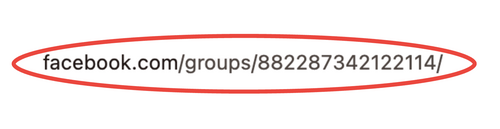
Meta refuses to take down a criminal impersonator calling himself Keith Fletcher who runs a Facebook Group calling itself the Dividend & Compounding Investor Club with the express goal of duping you into thinking it’s me through the use of stolen images, my likeness and biographical information, copyrighted materials, research and more.
He’s even posted pictures of my dog for cryin’ out loud!
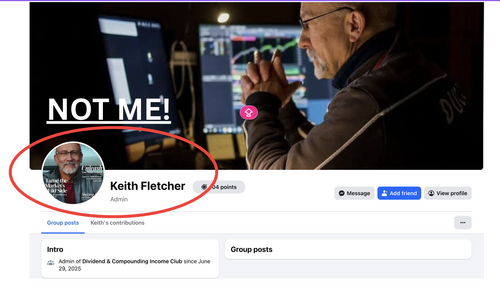
The goal is to gain your trust so that he and the group of “moderators” can obtain personal information or to trick unsuspecting individuals into transferring money into unregulated brokerage accounts, crypto scams and whatever other entities promoting fraudulent criminal activities via Telegram and WhatsApp.
We’ve sent all usual letters, complaints and evidence as has our counsel yet received no response whatsoever from Meta or El Zucko despite the fact that Facebook’s own user terms expressly prohibit impersonation and fraudulent activity.
I’m not surprised.
Reports suggests that as much as 10% of Meta's revenue – some $16bn – is from fraud.
Convenient, eh?
Anyhoooooo, that’s enough of that... I applaud YouTube and Alphabet if this is more than lip-service.
Meanwhile, DO NOT ENGAGE the slimeballs and, whatever you do, do NOT fall for their schlock. Better yet, report Keith Fletcher, his moderators and the Dividend & Compounding Income Club to Meta and, if necessary, to the appropriate law enforcement authorities. 💯
Bottom Line
Missing opportunity is always more expensive than trying to avoid risks you can't control.
Always.
Now, let’s MAKE it a great day.
You got this — I promise!
Keith 😀


