

☕ What’s next… for your money
Nov 04, 2026Howdy! 👋
There’s a lot of finger pointing this morning… some in victory, some in defeat.
Millions of folks are asking one simple question.
What’s this mean for my money?
The answer is pretty simple.
Not what a lot of people think.
Take a look.

Here’s the surprising part.
Historically speaking, the markets actually like it when politicians duke it out.
Since 1980, the S&P 500 has averaged a 15% gain in the year after elections that left no single party in charge. When one party held all the cards, the average was 11.5%.
Split government produced a positive year in 14 of 15 cases.
Go back further and it gets better.
Midterms that produced a Republican president facing a divided government have happened 14 times since the 1880s, and the market finished higher a year later 93% of the time.
Why?
A decidedly simple explanation that most pontificators and many passionate people conveniently overlook is that when Washington can’t agree on much, that also means it can’t mess up much either. Fewer sweeping surprises mean companies can plan, that there’s more certainty and, yes, dare I say it, higher profit potential over time.
Innovation is funny that way.
Money loves a plan just like smart investors.
So my suggestion is that you let the talking heads holler. Your job – and mine – is to stick to the plan.
You do have one, right!?!?
Mine is stupid simple.
Buy the best, ignore the rest!®
Here’s my playbook and 5 areas the midterms are likely to impact the investing process.
1 – Foreign policy
US Midterms have changed Congress, not the president.
I expect Congress to take a very hard look at spending and involvement in Russia/Ukraine, China and Iran/Israel/Gaza. This means more hearings and tons more speculation about tighter budgets, more control and so on.
I expect that defense contractors may take a bit of a hit, but don’t think for a NY minute they’ll go away. The world is a complicated place and that means any pullback is an opening, generally speaking.
It also means lower inflation if the Strait of Hormuz reopens and pressure eases on dinosaur juice… diesel specifically. It also potentially means lower grocery bills.
That’s a great mix for the best big energy choices, imho.
Meanwhile, short-term traders are “repricing risk” – something I explicitly called out as likely ahead of Monday’s opening bell. (Watch)
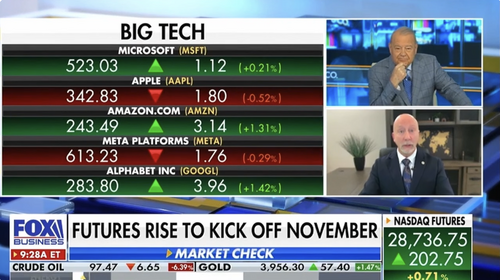
Do not be surprised if there’s a quick reversal and some gamesmanship by the end of the week!
2 – The US dollar
The dollar blinked this morning… hard.
The thinking is that a split Washington likely means less spending and maybe a friendlier Fed down the road.
I am not certain that’s true, but that’s moot.
Here’s why.
Markets trade on what traders believe in the moment, and this morning they believe gridlock equals restraint. Let me respectfully point out that restraint has never been a habit either party keeps for long.
Whether spending actually slows is a question for 2027 and 2028.
A softer dollar helps US companies that sell overseas, because foreign sales are worth more when they’re converted back into dollars.
There’s a catch, though.
A weaker dollar also makes imports more expensive, and more expensive imports put upward pressure on inflation. That’s the very thing that could keep the “friendlier Fed” from showing up on schedule. Ahem, Mr. Warsh… paging Mr. Warsh… please pick up the white courtesy phone.
Now is the time to take a look under the hood at where your companies actually make their money.
Global leaders – like those I prefer and which we talk about regularly – with pricing power and a big chunk of sales outside the US pick up a currency boost on top of whatever they earn on their own merits.
Companies that import most of what they sell and sell it here at home get squeezed in the other direction so smart investors have every reason to be leery. I know I am.
Currencies can reverse in a week, so don’t chase this. Instead, I suggest that you treat it as a bonus on top of a business you’d want to own anyway.
Keith’s Investing Tip: Own companies that sell to the whole world and the currency question tends to take care of itself over time.
3 – AI spending slowdown… or not
Washington will make a lot of noise about regulating AI. Hearings make great TV and, if you turn the volume off, make a great substitute for Animal Planet.
Here’s the thing.
Congress isn’t paying for the buildout of chips, data centers and power.
Companies are.
Respectfully, you think a vote count changes that?
Me neither.
The best AI companies will keep doing what they do best. And that means profit potential isn’t far behind.
Stay focused.
At the risk of sounding like a broken record… the worrywarts are reading the AI boom wrong.
They crow “show me the money” but to a point that I have made many times over… the money is already there… in cloud revenue, in operating margins, in growth. It won’t show up in productivity and “sales” for years any more than it did with personal computers, which took nearly a decade to register in the g’uvmint statistics.
Demand isn’t the constraint many seem to think it is.
AI is profitable even though conventional metrics like “free cash flow” make for a convenient narrative that it isn’t. I’ve been over this repeatedly, too.
Current accounting principles don’t accurately nor adequately reflect digital investing so anything that’s dependent on ‘em is, by implication, so far off base that it’s stupefying.
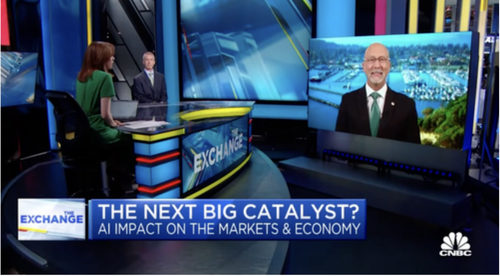
Keith’s Investing Tip: Picks and shovels people, picks and shovels.
4 – Metals
Gold jumped about 3% this morning, back above $4,000 an ounce.
Silver did even better.
Do NOT confuse this with what it really is… institutions cross-hedging and repricing risk.
The move has nothing to do whatsoever with the metals themselves for reasons that we have talked about many, many times over so I won’t bore you to tears by repeating all that.
Metals are about leverage at this point.
There may be $50 - $100 on top of every $1 invested in the shiny stuff, which means prices increasing reflect the big money moving in and outta according to how much juice they need.
Metals don’t pay dividends, they don’t grow and they sure as heck don’t build anything.
And if they do go to $5 gazillion dollars an ounce, I submit that there are gonna be a lot more serious things to worry about than the stock market. Just sayin’.
Keith’s Investing Tip: Make a list of the companies you’d love to own. Then, let the drama hand you a better price.
5 – Healthcare
If there’s one sector that lives and dies by what happens on Capitol Hill, this is it.
That’s not a bad thing.
Gridlock tends to take the most extreme policy outcomes off the table, which is exactly what companies with real pipelines need to keep investing in the next generation of treatments.
The big structural stories aren’t going anywhere no matter who votes for what.
People are getting older, GLP-1 drugs are reaching a market where most folks who could benefit still aren’t taking one, and medical innovation isn’t slowing down as AI accelerates it.
What I’d be leery of is the middlemen: companies whose profits depend on a specific reimbursement rule or a specific subsidy staying exactly where it is. Those are the companies that are likely to whipsaw when Washington starts yapping.
Keith’s Investing Tip: Own the companies that make the cure, not the ones that depend on who pays for it.
Now and if you’re getting the results you want, cool beans.
I mean that.
But let me ask you something.
Do you know where you want your money to be a year from now? Five years from now? A decade on?
Most investors never answer that question.
I’m here to tell you that your financial future changes the moment you decide it will.
One Bar Ahead® is where I share what’s on my shopping list why it's there and provide the ongoing education, and how to manage risk so that you can act with confidence. Readers tell me that it has changed their lives. I’ll be here if you need me.
Bottom Line:
Smart investors do money, not politics.
You got this – I promise!
Now and as always, let’s MAKE it a great day. 💯
Keith 😀


